5 Nutrient Deficiencies Linked to Brain Inflammation, Dementia & Alzheimer’s

Do you crave high mental energy, clear thinking, good memory, and a balanced mood? Poor nutrition and nutrient deficiencies can disrupt the brain health you desire and increase the risk of brain inflammation, dementia, Alzheimer’s disease, and mood imbalances.
Supporting brain health through targeted nutrition is important for mental clarity, emotional balance, and long-term cognitive resilience. Getting the right nutrients will reduce brain inflammation and optimize your mental health.
In this article, I will discuss key nutrients for brain health. I will share the top 5 nutrient deficiencies associated with brain inflammation and how to improve them. I will also share 5 bonus nutrients for optimal brain health.
Key Nutrients for Brain Health
Brain health is essential for cognitive function, emotional regulation, memory, and overall quality of life. Brain health can influence many things, including focus, learning, memory, mood, and resilience to stress.
However, your brain is a complex and sensitive organ and nutrient deficiencies, inflammation, blood sugar imbalances, and oxidative stress, among other factors, can influence its health and function. Key nutrients that support brain health include B vitamins, especially vitamin B12, B6, and B9 (folate) for neurotransmitter production and methylation, magnesium for stress regulation and neuron signaling.
We also have vitamin D for neurotransmitter synthesis and neural health, omega-3 fatty acids for neuronal membrane integrity and communication, zinc for neurotransmitter activity and proper stress response, choline for neurotransmitter health and cell membrane integrity, and coeznyme Q10 for mitochondrial energy production and neuron protection.
Additionally, creatine is important for cellular energy availability for neurons, saturated fats for maintaining structure and stability in the brain cells, and antioxidants for protection against oxidative damage. Supporting brain health through targeted nutrition is important for mental clarity, emotional balance, and long-term cognitive resilience.

5 Nutrient Deficiencies Associated with Brain Inflammation
Let’s look at the top nutrient deficiencies linked to brain inflammation, dementia and Alzheimer’s disease.
Vitamin D
Vitamin D plays a critical role in brain health by supporting neurodevelopment, neurotransmitter production, and protection against inflammation and oxidative stress. Vitamin D receptors are found across your brain, including areas involved in mood regulation, memory, and executive function. Vitamin D influences serotonin synthesis and calcium balance in neurons, both of which are essential for healthy signaling between brain cells.
Vitamin D is necessary for regulating neurotrophic factors that support neuron growth and survival and also help modulate immune activity in the brain to reduce chronic neuroinflammation, which is linked to depression, cognitive decline, and neurodegenerative conditions. Vitamin D deficiency can increase the risk of mood disorders, impaired cognition, and accelerated brain aging.

A 2025 cross-sectional analysis published in Frontiers in Nutrition examined the data from the National Health and Nutrition Examination Survey (NHANES) 2013 – 2014 to look at the effects of vitamin D on brain and mental health. The study looked at 1,344 elderly participants, classified into 3 groups based on the vitamin D intake.
The study found that the highest intake of vitamin D at 4.9 mcg/day had a significantly lower risk of poor cognitive function and depression, compared to the lowest intake group at less than 2.4 mcg/day.
In conventional medicine, they are generally looking at 30 ng/mL. In functional medicine, we like to see 50 ng/mL or above. The best way to improve your vitamin D levels is getting out in the sun, but supplementation is important for those living an indoor lifestyle or living in a gloomier, colder climate.
You want to take vitamin D3 with vitamin K2 and also optimize your magnesium levels to ensure optimal effects. I use our Vitamin D3/K2 Power which has a clinical dose of vitamin D3, vitamin K2 and magnesium to optimize absorption. Another good option here is our Immunocharge which has a clinical dosage of vitamin D3, vitamin K2 and magnesium as well as 7 other key nutrients for immune and brain health.

Magnesium
Magnesium is necessary for 300 to 500 essential functions in the body. Yet, 80 to 90 percent of the population is functionally deficient in it. It is essential for mitochondrial function. Magnesium regulates calcium metabolism and neurons.
Dysregulated calcium metabolism can lead to a high glutamate-to-GABA ratio. Glutamate acts as the gas pedal for the brain, and GABA acts like the brakes. Dysregulation can lead to neuro-excitotoxicity, where neurons excite themselves to death.
When one neuron dies, it spills calcium and overexcites surrounding neurons, which leads to excitotoxicity and damage to many neurons in a domino effect. This leads to neuronal cell death, which, if there is too much of it, can increase anxiety, depression, headaches, muscle spasms, tight muscles, and other issues.

A 2024 systematic review and meta-analysis published in Advanced Nutrition looked at 3 randomized controlled trials and 12 cohort studies. Researchers found that low levels of magnesium in the blood may increase the risk of dementia and cognitive issues. They also found that too high levels can also cause a problem, so balanced levels are key.
The daily recommendation is 300 – 420 mg a day, and you need more if you have a poor diet or health issues. Yet, most people are not even meeting the bare minimum. Moreover, many medications can also deplete magnesium, including PPIs for acid reflux, statins, anti-depressants, ADHD medication, blood pressure medication, antibiotics, and chemotherapy drugs.
When testing your magnesium levels, we want to see 2.2 mg/dL or higher. Additionally, I like to look at GGT levels for liver enzymes. If it’s under 10, it’s often an indication of a magnesium deficiency.
In addition to testing, we have to look at the root causes and symptoms of magnesium deficiency. Meeting your needs through food alone is very difficult, so most people require supplementation. Epsom salt baths and magnesium lotions are also great for improving magnesium.

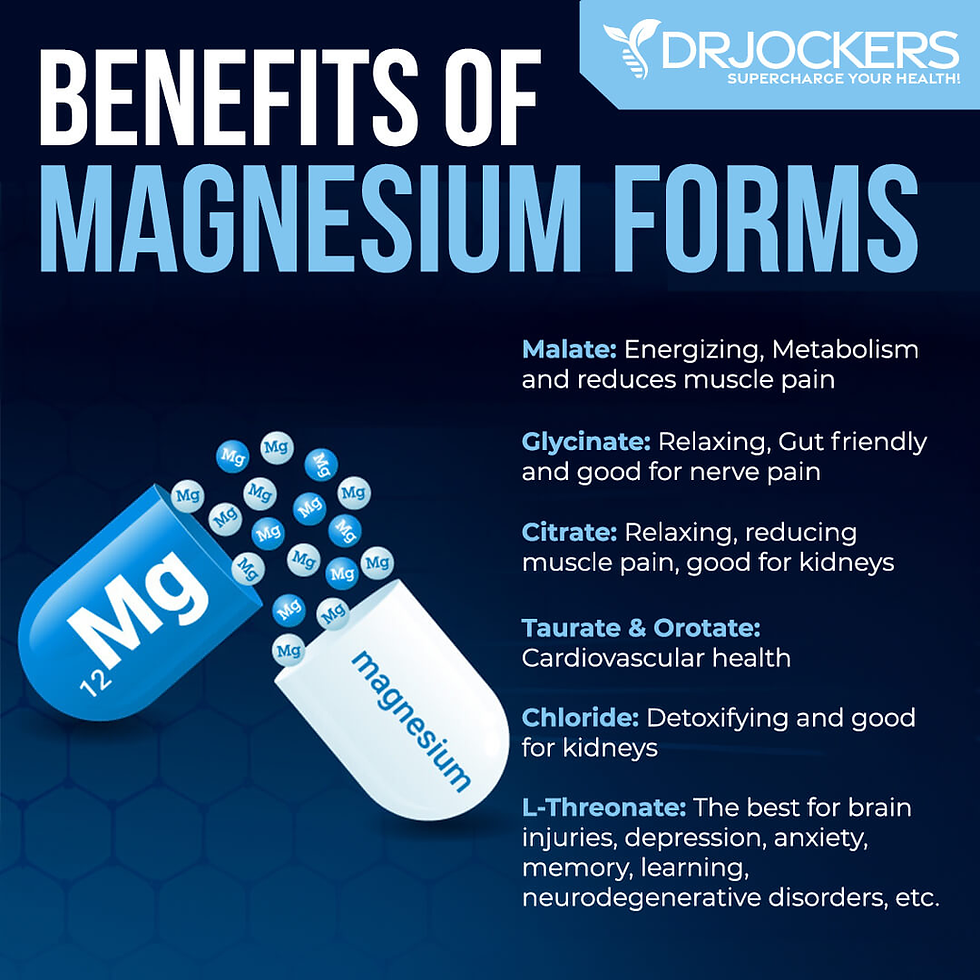
At DrJockers.com we use magnesium glycyinate, malate and L-threonate forms in our bestselling Brain Calm Magnesium. This product is best for brain health, cognition, mood and memory as well as reducing stress and bringing calmness.
We use magnesium taurate, malate and glycinate in our TriMag complex. This is great for relaxation, muscle and nerve health and heart health. We also use these forms in our CT Minerals product.
We also use magnesium citrate in our Mg-K Citrate and our D3/K2 Power as well as our Immunocharge products and magnesium glycinate in our multivitamin Core Nutrients and magnesium malate in our multivitamin High Energy Support.
Vitamin B12
Vitamin B12 is crucial for brain function, supports the nervous system, aids memory, and protects the myelin that surrounds nerve fibers. It is key for red blood cell maturation. When blood cells don’t mature and shrink efficiently, they can’t deliver oxygen to cells and the mitochondria, which can lead to issues, including brain-related ones.
It is also critical for homocysteine metabolism. Homocysteine is a reactive amino acid that gets converted into SAM-e, a precursor to serotonin and dopamine. High levels of homocysteine can damage brain capillaries.
Deficiencies in vitamin B12 can increase fatigue, poor sleep, depression, anxiety, impaired cognitive function, chronic pain, hair problems, blood disorders, infertility, acnes, allergies, and other issues. Vitamin B12 deficiency may lead to dementia-like symptoms, which can be improved simply by optimizing vitamin B12 levels.

A 2025 study published in Annals of Neurology looked at the B12 levels of 231 healthy elderly volunteers with a median age of 71.2 years. Their median B12 blood concentration was 414.8 pmol/L which is quite low.
Researchers found that low levels of B12 can increase the risk of potential latency delay, processing speed impairment, and larger volumes of white matter hyperintensities on MRI. Results suggest that current vitamin B12 recommendations may be too low for optimal brain health.
In the US, we measure B12 deficiency at serum levels below 200 pg/mL, while in Japan, they consider anything under 550 pg/mL to be low levels. Functional medicine practitioners tend to agree with the Japanese model. I like to see over 800 pg/mL.
B12 deficiencies may be caused by increased age, being a vegan or vegetarian, eating a poor diet, leaky gut, low stomach acid levels, heavy alcohol usage, and various medications. To improve your levels, eat organ meat, beef, and nutritional yeast.
Most people require supplementation, and if you are vegan, supplementation is non-negotiable. You want to choose methylcobamalin, hydroxycobamalin, or adenosycobamalin for B12 supplements and avoid cyanocobamalin.
At DrJockers.com, we only use the methylcobalamin form in our products such as B Strong, B12 Power, Methyl B Complex, Methyl Power and our multivitamins Core Nutrients and High Energy Support.

Folate
Folate or vitamin B9 is another important B vitamin for brain health, neurotransmitter production, cellular methylation, red blood cell development, cardiovascular function, and more. Folate can increase the risk of dementia and related mortality.
A 2022 national study published in Evidence Based Mental Health looked at 27,188 individuals between ages 60 and 75 without pre-existing dementia. They tested participants’ folate serum levels and followed them for at least 10 years in relation to dementia and all-cause mortality risk. Researchers found that folate deficiency was linked to an increased risk of both dementia and mortality.
I like to see folate levels at or above 15 ng/mL. Besides brain and mental health issues, deficiencies can result in poor pregnancy outcomes, congenital abnormalities, stroke, and cancer.
Green leafy vegetables, lentils, turnips, broccoli, avocados, and beef liver are great sources of folate, but supplementation can be necessary to improve or avoid deficiencies. With MTHFR gene mutation and methylation issues, I recommend methylated forms of folate and methylated B vitamins.
At DrJockers.com, we only use the methylfolate (5-MTHFR) form in our products such as B Strong, Methyl B Complex, Methyl Power and our multivitamins Core Nutrients and High Energy Support.

Vitamin B6
Vitamin B6 or pyridoxine also plays an important role in brain health by supporting the production of key neurotransmitters, including serotonin, dopamine, GABA, and norepinephrine, which all play a role in balanced mood, stress response, emotional balance, and focus. It helps nerve signaling, myelin formation, and optimal energy metabolism in the brain.
By supporting proper homocysteine metabolism, vitamin B6 may reduce the risk of cognitive decline, neurodegeneration, and depression, which may be linked to elevated homocysteine levels. Poor vitamin B6 levels may contribute to low mood, anxiety, brain fog, and poor cognitive performance.
A 2022 study published in Annals of Medicine and Surgery (London) looked at the link between vitamin B6 and mental health. The study included 478 participants who were assigned to vitamin B6, B12, and placebo groups.
The study found that participants who received B6 supplementation experienced significant improvements in depression and anxiety compared to the placebo group, and the B12 experience minor improvements in comparison. Researchers also found that B6 was linked to higher GABA levels, which may explain the benefits for anxiety and depression.

Additionally, in the next phase of the study, the researcher found that combining vitamin B6 with magnesium supplementation improved stress levels, physical activity, and anxiety more than vitamin B6 alone.
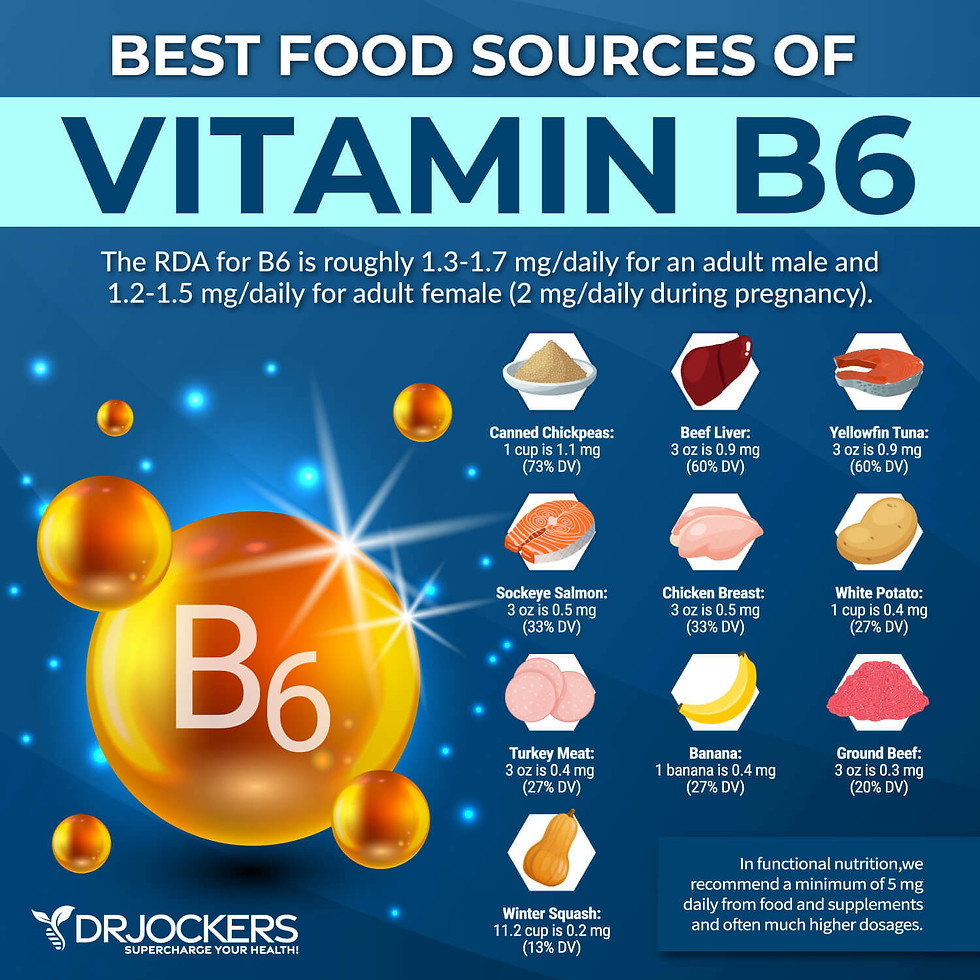
The general recommendation for daily vitamin B6 intake is between 1.3 mg per day and 2 mg. In functional medicine, we usually recommend 5 to 25 mg per day, especially when we are seeing deficiencies or chronic health issues.
Great food sources of vitamin B6 include chicken, turkey, tuna, salmon, beef liver, eggs, avocados, potatoes, sweet potatoes, chickpeas, lentils, sunflower seeds, and pistachios. However, supplementation is often recommended to improve deficiencies and health issues.
We recommend getting the pyridoxal-5-phosphate (P-5-P) form of vitamin B6 which is the most bioavailable form. We use the P-5-P form in our products such as B Strong, B12 Power, Methyl B Complex, Methyl Power and our multivitamins Core Nutrients and High Energy Support.
5 Bonus Nutrients to Improve Brain Health:
Additionally, to these vitamins and minerals, I recommend 5 more nutrients for brain health. These bonus nutrients play an important role in brain health as well as immune and mitochondrial function and these work to help reduce brain inflammation.
While some of these bonus nutrients you can get from your diet, good supplementation can also be very beneficial. Here I will go through the best foods and supplements to support these key nutrients.

Omega-3 Fatty Acids
Omega-3 fatty acids offer both anti-inflammatory and neuroprotective benefits, thus may reduce neuroinflammation. They can support your brain health by maintaining neuronal membrane fluidity, which is essential for efficient signaling and synaptic plasticity. Additionally, omega-3s may also improve mood, attention, and cognitive function across the lifespan.
A 2022 systematic review published in Cureus selected 9 studies out of 174 articles. The studies examined a total of 1,319 participants (591 men, 728 women). 700 of the participants were treated with omega-3 fatty acids and 376 received a placebo. The study found that omega-3s were safe and well-tolerated and increased learning, memory, blood flow in the brain, and cognitive well-being.
I recommend adding in 1 gram of high quality long-chain omega 3 fatty acids EPA and DHA from a pharmaceutical grade molecularly purified supplement in the trigylceride form. I recommend Pro Omega which has 650 mg of EPA and 450 mg of DHA per serving.

Zinc
Zinc is essential for neurotransmitter signaling, synaptic plasticity, memory, and learning. It also helps immune regulation and antioxidant defenses, which may protect neurons from inflammation and oxidative stress. Adequate zinc levels are also critical for a balanced mood and cognitive function.
A 2020 review published in the International Journal of Molecular Sciences explained that zinc has a crucial role in neurophysiology, including cell growth and cell proliferation. Researchers found that while zinc deficiency can lead to neuronal death, neurodegeneration, cognitive decline disorders, poor learning, and reduced memory.
However, in brain disease, the release and accumulation of excessive amounts of zinc ions can also have neurotoxic effects and harm postsynaptic neurons. Findings suggest that balanced zinc levels are critical for the central nervous system and brain health and may reduce the risk of neurological disorders.
Zinc bisglycinate is the most bioavailable form of zinc supplementation. At DrJockers.com, we only use zinc bisglycinate in our products such as Zinc Charge and Immunocharge as well as our multivitamins Core Nutrients and High Energy Support.

Choline
Choline is an important nutrient for brain health because it is needed to make acetylcholine, a neurotransmitter essential for memory, learning, and attention. It is also necessary for the structure of neuronal cell membranes through its role in phospholipid synthesis. Adequate choline intake may support brain development and neuroprotection and aid cognitive performance.
A 2025 animal study on young mice published in Redox Biology looked at the effects of choline on cognitive decline. Microglia are the brain’s resident immune cells that monitor the nervous system and respond to injury, infection, and inflammation.
The α7-nAChR (alpha-7 nicotinic acetylcholine receptor) is a specific subtype of nicotinic acetylcholine receptor found widely in the brain, immune cells, and peripheral tissues, where it plays a key role in cognitive function, neuroprotection, and inflammation regulation.
The study found that by inactivating the microglia and upregulating α7-nAChR, choline can offer neuroprotective benefits. It may reduce cognitive impairment related to sleep deprivation, reduce neuroinflammation, and decrease oxidative stress.

CoQ10
CoQ10 supports brain health by playing a critical role in mitochondrial energy production, which is essential for high-energy neurons. It also functions as an antioxidant, and as a result, can offer protection for brain cells from oxidative stress and neuroinflammation. CoQ10 may also aid cognitive function and neurological resilience, especially with mitochondrial dysfunction or aging.
A 2023 study published in the Journal of Gerontology examined 64 older individuals (48 women, 16 men) between ages 65 and 99 to understand the effects of CoQ10 on the brain.
Researchers found that plasma CoQ10 was significantly associated with better executive and cognitive function when other factors, including exercise and nutrition, were controlled. The research indicates that cognitive decline may be linked to a decrease in antioxidant defenses and related low CoQ10 levels. Improving CoQ10 status may reduce the risk of brain decline.
We use a highly bioavailable form of CoQ10 to support mitochondrial and brain health in our MitoActive and Mito Support products.

Creatine
Creatine may be beneficial for your brain health by helping maintain cellular energy availability, especially if there is high cognitive demand or stress. It also plays a role in neuroprotection and may support memory and attention. It may be particularly beneficial to improve cognitive issues related to energy dysregulation, such as sleep deprivation, aging, or neurological stress.
A 2024 systematic review and meta-analysis published in Frontiers in Nutrition looked at the potential benefits of creatine monohydrate supplementation on cognitive function and reducing the risk of cognitive impairment-related diseases. For the review, 16 randomized controlled trials with a total of 492 healthy participants between age 20.8 and 76.4 were included.
Researchers found that creatine supplementation resulted in improve memory, attention time, and processing speed, but had no effect on executive function and cognitive function. The research found that creatine had more benefits for those with health issues, females, and those between 18 and 60.
Both short-term (less than 4 weeks) and long-term (more than 4 weeks) supplementation had similar effects on cognition, suggesting that short-term supplementation can make a positive difference. We use the highest quality creatine monohydrate in our Creatine Strong powder.

Final Thoughts
Poor nutrition and nutrient deficiencies can disrupt the brain health you desire and may increase the risk of brain inflammation, dementia, Alzheimer’s disease, and mood imbalances. I recommend that you follow my tips on how to support optimal brain health through targeted nutrition, which is important for mental clarity, emotional balance, and long-term cognitive resilience.


Comments