8 Types of Chile Peppers—and How Spicy They Are

The different types of chile peppers are ranked on the Scoville scale, which measures the heat of spicy foods. As a baseline, bell peppers have a score of zero on the Scoville scale; jalapeños, which have medium heat, have about 2,500-8,000 SHU (Scoville heat units). We're ranking eight varieties of chile peppers and where they land on the Scoville scale so you don't get any surprises the next time you reach for a pepper. We're also sharing our favorite recipes that use these fresh chile peppers.
Poblano Pepper

1,000-1,500 SHU
These medium-sized dark green peppers are very mild. Once dried, they become a dark reddish-brown color and are known as ancho chiles. When shopping for poblanos, look for peppers with a shiny, firm skin that feel heavy for their size. Any discoloration or wrinkly skin is a sign they're past their peak. Try them in our Hearty Southwestern Corn Chowder or these vegetarian Stuffed Poblanos.
Jalapeño Pepper

2,500-8,000 SHU
One of the most popular varieties of chile peppers, jalapeños are used in many dishes, including guacamole, relish, and pepper jelly. Try stuffing them with cheese for an easy appetizer. The seeds and ribs of the jalapeños contain the majority of the spice, so you can scoop them out for a milder flavor.
Fresno Chile

2,500-10,000 SHU
Shiny red Fresno chiles are about as spicy as jalapeños and often get mistaken for them. Fresnos are a hybrid of peppers from California. If you come across a Fresno, feel free to substitute it in a recipe that calls for jalapeños as the heat will be roughly the same.
Serrano Pepper

10,000-23,000 SHU
Serrano peppers are small but mighty. They're about three times as spicy as the average jalapeño, though their flavor is similar. Look for their bright emerald color at the grocery store. The heat may not register immediately, as it often hits at the back of the throat rather than at the tip of the tongue. Taste the spice in this Smoky Serrano-Mint Margarita recipe.
Bird's Eye Chile

50,000-100,000 SHU
Small and tapered, bird's eye chiles are most commonly used in Thai and Southeast Asian cuisine. These petite-sized peppers certainly pack a punch—they're about 50 times as hot as poblano peppers.
Scotch Bonnet

80,000-400,000 SHU
Native to the Caribbean and Central America, these multi-colored hot peppers are named after the traditional Scottish hat known as a tam o'shanter. What these stumpy peppers lack in size, they more than make up for in heat. Cut out the membrane (the pithy white part) and seeds to cut down on spice.
Habanero

100,000-350,000 SHU
Habaneros have a sweeter heat, but the heat can be overpowering—so use them carefully. You'll find habaneros in shades of firetruck red, sunny yellow, tangerine orange, and pine green. As the color changes from green to orange to red, they become hotter and hotter. Try them in this Ceviche with Tropical Fruit and Habanero.
Ghost Pepper
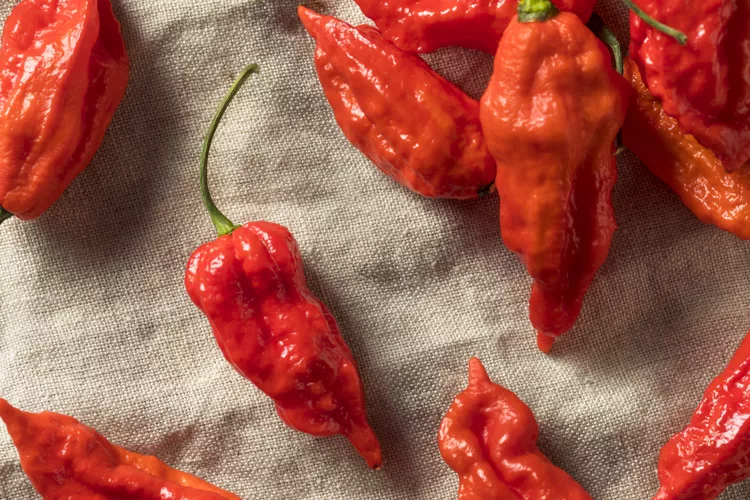
855,000-1,041,427 SHU
Ghost peppers are about as hot as it gets. There are less than half a dozen known chile peppers that pack more heat than these. Also known as bhut jolokia, the ghost pepper originated in northeast India but has gotten worldwide fame for its painful heat. Thanks to their growing popularity, you can now find them in some farmers' markets, spice markets, and grocery stores.
TIP
If you're handling very spicy peppers like the ghost pepper, always wear gloves to protect your skin from burning sensations. Avoid touching your face, especially your eyes, while working with these hot peppers, as even a small amount of residue can cause intense irritation.


Comments