Synthetic Biology Just Took a Big Step. We’re Watching Where It Goes Next.

Synthetic biologists are one step closer to building life from scratch. They’ve just created a fully synthetic “SpudCell” that can feed, grow, and reproduce. Science like this rarely stays in the lab for long. It tends to end up in food, whether that was the intent at creation. And when it does, federal regulators aren’t doing anything to stop it. The only hope we have is for state lawmakers to draw the line.
Several states have taken action to ban lab-grown (cell-cultured) meat, but most of the synbio industry’s Frankenfoods are slipping past them: molds marketed as imitation meat (Quorn, MyForest); fake egg whites, whey, and blood made from genetically modified microorganisms (The Every Company, Perfect Day, The Impossible Burger); and lab-grown chocolate (Mondelez, Celleste).
These aren’t first-generation GMOs. Today, instead of modifying microorganisms with natural genes extracted from different organisms (like Monsanto’s rBGH), they use synthetic DNA. This technique was invented by Craig Venter in 2010 and appropriated by Monsanto in 2013 when it acquired an equity stake in Venter’s Synthetic Genomics.
Food made with GMO microbes may be toxic or trigger allergies. Back in the 1980s when Showa Denko decided to produce its tryptophan supplement with genetically engineered bacteria, 37 people died and 1500 were permanently disabled.
But they’re completely unregulated. Synbio GMOs enter our food through the FDA’s “Generally Recognized as Safe” (GRAS) loophole.
There’s no safety review. Companies simply declare their own products GRAS, and even that is voluntary. Food-safety lawyers argue this violates the 1958 Food Additives Law, but they haven’t won that fight in court.
Now the technology is leaping forward again. This summer, University of Minnesota researchers unveiled “SpudCell”, the first synthetic cell built entirely from non-living molecules that can feed, grow, and divide. It isn’t alive, and it isn’t anywhere near your grocery store. But it shows how fast this field is moving.
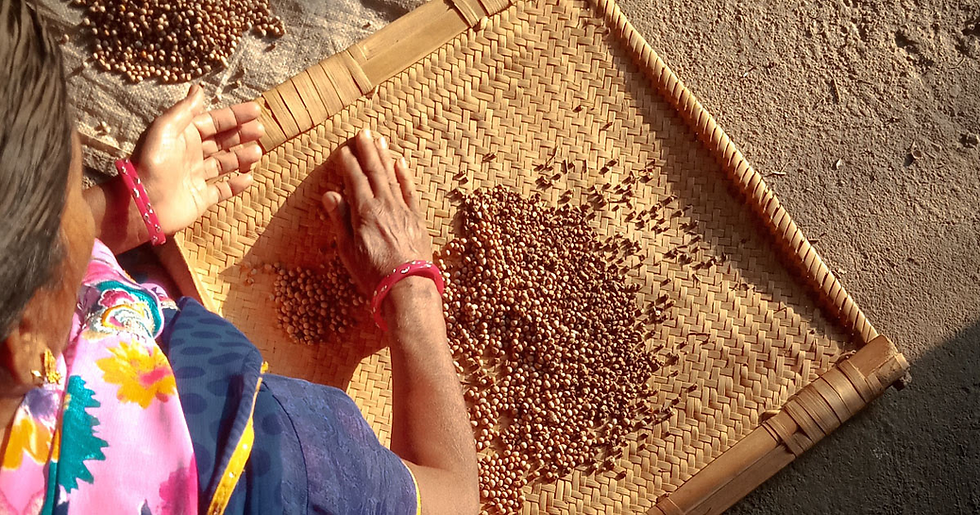
ORGANIC & LOCAL AGRICULTURE
Planting Seeds in Times of Darkness
by Winona LaDuke, Minnesota Women’s Press:
“Our prophecies as Anishinaabeg speak of this time as that of the Seventh and Eighth Fire. We are told that we will have a choice between a scorched path and a green path. We must take the green path if we are to survive and to light the Eighth Fire of peace. Those teachings have implications for all of us. Here are a few of those teachings.
Seeds are our future, yet, in the world of globalized agriculture, things are not looking good. One out of four farmers this year will not be buying fertilizer, and more farms will go under. That’s a price of war. This will be a challenge for food that most of us will eat, and this is also a moment to grow, without the chemicals of war and conflict.
This is the time to nourish and replenish soil, not scorch it with additives that end in -cide, the word of death: pesticide, fungicide, homicide, genocide. Believe in life.
Our awareness of this crisis is opportunity. It enables us to reaffirm relationship with soils through organic and local agriculture and rethink how we treat ‘dirt.’”
From Transgenes to Synthetic Cells — How Food Safety Was Never Enforced
This summer, researchers at the University of Minnesota announced they had built a cell entirely from non-living molecules, a lab creation nicknamed “SpudCell” that can feed, grow, copy its own DNA, and divide for about five generations. The headlines called it a breakthrough, and it is. It is also, importantly, not alive, it makes no energy of its own, and it is nowhere near your dinner plate.
So why should anyone who cares about food safety pay attention to a blob in a petri dish? At the rate that synbio has been going over the last thirty years, we need to be watching carefully that the possibility of the technology used to create SpudCell not be introduced into food and farming.
A Brief History of Synbio Food
To understand why the synthetic cell matters, it helps to see what came before it.
The first genetically modified organism (GMO) hit the U.S. food supply in 1994: Monsanto’s recombinant bovine growth hormone, rBGH (also called recombinant bovine somatotropin, rBST). To make it, scientists took the gene a cow uses to produce growth hormone, inserted it into E. coli bacteria, and turned those bacteria into tiny factories that produced the hormone, which dairies then injected into cows to push milk production higher.
The technology continued to develop. In 2010, geneticist Craig Venter demonstrated something genuinely new: that, rather than taking genes from another organism, you could design DNA on a computer, synthesize it from scratch, and install it in a living microbe. It took less than a decade for Venter’s 2010 invention to make it from laboratory experiments to food ingredients.
The industry now markets this technology under a more neutral name, “precision fermentation.” The name is new. The underlying idea, reprogram a microbe to manufacture a molecule for you, is three decades old. The rebrand is intended to overcome consumer revulsion at the idea of eating GMOs.
What’s Already on the Shelf
Many of these engineered foods are already for sale, and they’re not labeled as products of synthetic biology or genetic engineering.
Precision-fermentation ingredients, proteins brewed by genetically engineered microbes, are in stores and restaurants now. Impossible Foods’ fake blood, synthetic soy leghemoglobin, is produced by genetically engineered yeast. Perfect Day makes a synthetic whey protein the same way. The Every Company’s engineered egg-white protein is worked into products at major retailers. As one trade report noted, the companies buying it often keep the relationship confidential, and rising egg prices, not veganism, may be the real reason it’s being swapped in.
Mold is another synthetic-biology product entering the food supply. The meat substitute sold as Quorn is a “mycoprotein”, a fungal biomass. There are newer brands following in Quorn’s footsteps: MyForest Foods’ MyBacon, Juicy Marbles’ Kinda Cod, and others, some grown from fungal microbes the companies have engineered in the lab.
The labels, where they exist at all, are actively misleading. The Every Company’s “animal-free egg white protein” is marketed by Healthier Comforts as “real egg white proteins, free from GMOs” but the fine print on the back of the packaging admits it’s made by precision fermentation using a genetically modified microorganism. Both claims cannot be true.
The Regulatory Gap that Keeps Growing
All of this reaches us without review through a gap in Food and Drug Administration regulations known as GRAS.
In 1958, Congress passed the Food Additives Amendment, which requires new food ingredients to undergo rigorous safety testing before they can be sold. The law made an allowance for substances that were “generally recognized as safe” (GRAS), and the Food and Drug Administration let the exception swallow the rule.
Over time, more and more companies have used the GRAS loophole. All a company has to do is decide, on its own, that its novel engineered ingredient is GRAS, and it doesn’t even have to tell the FDA it has done so. When companies do file a voluntary notice, the agency’s typical response is a “no questions” letter, which sounds like approval but means only that the FDA has no further questions about the company’s own GRAS determination. Perfect Day’s synthetic whey received one; so did Impossible Foods’ soy leghemoglobin. Both have used it as a seal of approval. Food-safety lawyers argue this arrangement violates the 1958 law, but they have not yet won that argument in court.
The result is alarming: there is no reliable public record of which synthetic-biology ingredients have entered the food supply, no mandatory safety testing, and no required labels. It’s a big experiment and we are the test subjects.
It Doesn’t Have To Be This Way
Other places have drawn firmer lines. The European Union’s 1997 Novel Food Regulation is roughly what the 1958 law might have been had the GRAS exception not grown so large: new foods must be reviewed and authorized before they can be sold. It’s why the Impossible Burger’s signature fake blood still isn’t cleared for sale in the EU. Its engineered leghemoglobin is regulated there as a GMO requiring pre-market authorization, a process that’s been stalled since 2019.
Some countries are even more proactive. In 2023, Italy became the first country to ban lab-grown (cell-cultured) meat from its food supply, but it hasn’t weighed in on foods made from GMO microbes.
Watching the Road Ahead
None of this means the synthetic cell is about to show up in your milk. It means the synthetic cell is on a familiar path, the same fast, unlabeled, unreviewed path earlier products took, where regulators still fail to enforce safeguards.
We don’t yet know enough about synthetic cells to say what they’ll become. Before this technology follows GMO microbes into our food, we should insist on what was never imposed in thirty years of synthetic biology: independent, mandatory safety reviews, honest labeling, and regulations that protect us. Until the federal government starts doing that, all we can do is to hope state legislators will keep this stuff out of stores and restaurants.
Further Reading and Sources
SpudCell / The Synthetic Cell
Craig Venter’s 2010 Synthetic Genome
The Every Company Egg-White Protein (Walmart, Target)
Quorn / Mycoprotein and GRAS
“Animal-Free Egg White” Labeling Contradiction (Healthier Comforts / EVERY)
How GRAS Works (Voluntary Self-Affirmation, “No Questions” Letters)
Impossible Burger, EU/GMO Status
Italy’s 2023 Lab-Grown Meat Ban (Law 172/2023)
OCA v. Perfect Day Lawsuit


Comments